
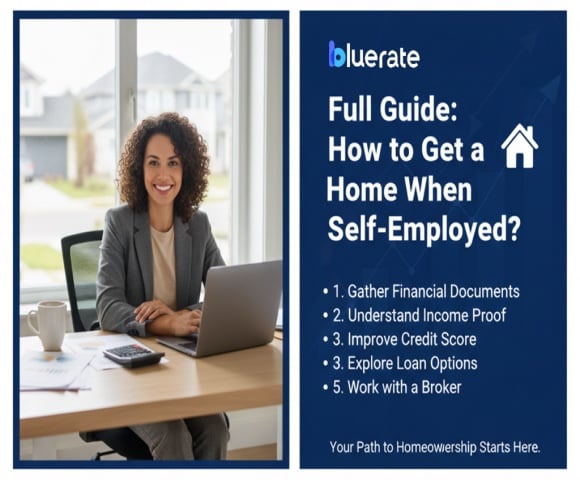
Being your own boss comes with freedom, but I know firsthand that the mortgage process can feel like a penalty for that independence. Traditional banks often view variable income as “high risk,” but let me be clear: getting a mortgage as a self-employed individual is entirely possible with the right preparation.
Whether you are a freelancer, a small business owner, or a 1099 contractor, this guide is your roadmap to navigating the underwriting maze. We will move beyond generic advice and dive into the specific documents, financial habits, and alternative loan routes you need to succeed if you want to get a home loan when self-employed.
By the end of this guide, you will have:
- A concrete checklist of documents you need to start gathering today.
- A clear understanding of Non-QM loans designed specifically for people like us.
- Actionable steps to structure your finances to look irresistible to lenders.
If you find yourself stuck or need immediate answers, you can always connect directly with professional non-QM loan officers for a free consultation at Bluerate.
1. Separate Finances
The very first step I recommend to any business owner is to strictly separate your business and personal lives. When underwriters look at your file, they are looking for clarity. Commingling funds—paying for groceries out of your business account or business software out of your personal checking—creates a “messy” financial picture that screams risk.
Here is your action plan:
- Open a Dedicated Business Checking Account: If you haven’t already, do this immediately.
- Pay Yourself a Salary: Set up a recurring transfer from your business to your personal account. In the mortgage world, we often call this an “owner draw.”
- Track Every Cent: Use bookkeeping tools like QuickBooks or Xero to categorize expenses.
By creating a clear paper trail, you make it easy for the lender to verify your income without guessing. A clean separation proves your business is a legitimate, stable entity capable of generating consistent cash flow, which is exactly what a lender needs to see to approve your loan.
2. Minimize Deductions
This is the classic “Self-Employed Catch-22.” We all love writing off expenses to lower our tax bills, but there is a catch: lenders typically look at your net income (after deductions), not your gross revenue. If you write off everything to show zero profit to the IRS, the lender sees zero income to pay a mortgage.
How to balance this:
- Time your application: If you plan to buy a home soon, you might need to claim fewer deductions for the preceding two years to show a higher net income.
- Differentiate Expenses: Understand that some deductions, like depreciation on equipment, can sometimes be “added back” to your income by the lender because they aren’t actual cash outflows.
I strongly suggest sitting down with your CPA to create a strategy. You need a “lender-friendly” tax presentation that complies with the law but optimizes your Adjusted Net Income for qualification. It’s about finding the sweet spot between tax efficiency and borrowability.
3. Improve Credit Score
Your credit score is the gatekeeper. For self-employed borrowers, a high score acts as a character reference that offsets the “risk” of variable income. While you can sometimes get approved with a score in the 600–620 range, life gets much easier—and cheaper—if you are above 700.
Steps to boost your score:
- Lower Utilization: Pay down credit card balances so you are using less than 30% of your limit.
- Check for Errors: Pull your report from the major bureaus. If you see an error, dispute it immediately.
- Consistency: specific late payments are deal-breakers. Automate your minimum payments so you never miss a due date.
Please be realistic about the timeline. Credit repair isn’t an overnight fix; it usually takes several months to a year to see significant movement. However, the effort pays off literally: a better score can lower your interest rate, saving you thousands of dollars over the life of the loan.
4. Save for a Larger Down Payment and Reserves
Cash is king, especially when your income doesn’t come from a W-2. Lenders view a larger down payment and substantial cash reserves as a safety net. If your business has a slow month, they want to know you have the liquidity to keep paying the mortgage.
What you should aim for:
- Reserves: Try to save at least 3 to 6 months of PITI (Principal, Interest, Taxes, and Insurance). Some specialized Non-QM loans might require even more.
- Down Payment: While 3% down is possible for W-2 workers, self-employed borrowers often see better terms with 10% to 20% down.
Start automating savings into a separate high-yield account now. Crucially, ensure all these funds are “seasoned”—meaning they have been in your account for at least 60 days. If you are using gift funds from family, make sure you get a proper gift letter. Lenders need to trace the source of every dollar.
5. Personal and Business Tax Returns
If you are going the traditional financing route (like Fannie Mae or Freddie Mac), your tax returns are the holy grail. Lenders generally require the last two years of personal (1040) and business returns (Schedule C, 1120S, or 1065).
Key things to watch for:
- Consistency: Lenders love boring, predictable growth. If your income jumped wildly from year 1 to year 2, they might average it. If it dropped, they would use the lower number.
- The “Write-Off” Trap: As mentioned earlier, if your returns show a business loss, qualifying will be difficult via traditional loans.
If your tax returns don’t reflect your actual purchasing power due to heavy deductions, don’t panic. This is where you might pivot to Non-QM options (which we will cover shortly) that don’t require tax returns at all. But if you can use tax returns, ensure they are complete, signed, and match the transcripts the IRS has on file.
6. Profit & Loss (P&L) Statements
A Profit and Loss (P&L) statement bridges the gap between your last tax return and today. It shows the lender how your business is performing right now. This document summarizes your revenue, costs of goods sold (COGS), and expenses to reveal your net profit over a specific period, usually year-to-date (YTD).
Best Practices:
- CPA vs. Self-Prepared: While you can generate a P&L from your accounting software, lenders heavily prefer (and sometimes require) a CPA-audited or CPA-signed P&L. It adds a layer of third-party verification.
- Alignment: Your P&L numbers should make sense when compared to your bank statements. If your P&L says you made $50,000 last month, but your bank account only shows $5,000 in deposits, the underwriter will raise a red flag.
A clean, accurate P&L is your best defense against claims that your business income is declining.
7. Bank Statements
For many self-employed people, tax returns don’t tell the full story. This is where Bank Statement Loans come into play. Instead of looking at taxable net income, lenders analyze your liquid cash flow—specifically, your deposits—over the last 12 or 24 months.
How it works:
- Personal vs. Business: You can use personal bank statements (usually 100% of deposits are counted) or business statements (where lenders might count 50% to 80% of deposits to account for overhead).
- Verification: Lenders will look for consistent deposit patterns.
A critical warning: Avoid large, unexplained cash deposits. If you sold a car or transferred money from savings, document it. Lenders want to see that the deposits are from business revenue, not loans or gifts. This method effectively treats your gross revenue (adjusted for margins) as your income, which is a game-changer for business owners with high expense write-offs.
8. Proof of Business Existence
It sounds obvious, but you have to prove your business is real. Underwriters need to verify that your income stream is active and likely to continue. I recommend creating a “Business Evidence Pack” so you are ready when asked.
Common documents to include:
- Business License: State or city registrations.
- Website: An active, professional web presence.
- Articles of Incorporation/Organization: For LLCs or Corps.
- Client Contracts: Shows future revenue.
- CPA Letter: A simple letter from your accountant verifying you have been in business for X years.
While social media is nice, it isn’t legal proof. Stick to government-issued documents or formal contracts. Lenders generally want to see that the business has been active for at least two years. The more “official” paper trails you can provide, the less the lender will question the stability of your employment.
9. Other Potential Documents
Beyond the major financial statements, being organized with supplementary documents can significantly speed up the underwriting process. I always tell borrowers to have a digital folder ready with the following:
- 1099 Forms: Essential for contractors to verify gross earnings from specific clients.
- Current Lease Agreements: If you rent an office or have rental income.
- Identification: Driver’s license and Social Security card.
- Asset Statements: 401(k), IRA, or stock portfolio statements (all pages, even blank ones).
- Explanation Letters: Brief, professional letters explaining any credit dings or employment gaps.
Think of this as “front-loading” the work. By handing over a complete package on day one, you prevent the back-and-forth emails that usually delay closings.
10. Explore Non-QM Loan Options
If your tax returns don’t justify the loan amount you want, you are not out of luck. This is where Non-QM (Non-Qualified Mortgage) loans shine. These are specifically designed for borrowers who don’t fit the standard “square box” of government-backed loans.
Here are the most effective options for self-employed borrowers:
- Bank Statement Loans: As discussed, lenders analyze 12–24 months of bank deposits to calculate income. Ideal if you have high revenue but high tax write-offs.
- P&L Only Loans: Qualification is based strictly on a CPA-prepared Profit & Loss statement (usually covering 12–24 months). No tax returns are required.
- 1099 Only Loans: Perfect for independent contractors (like realtors or gig workers). Lenders use the gross income on your 1099 forms to qualify you.
- DSCR Loans (Debt Service Coverage Ratio): Designed for real estate investors. Qualification is based solely on the property’s rental income potential versus its debt, not your personal income.
- Asset-Based / Asset Depletion Loans: If you have significant savings but a low monthly income, lenders “deplete” your assets on paper to create a monthly income figure.
- ITIN Loans: For borrowers who live and work in the US but do not have a Social Security Number.
- Foreign National Loans: For non-residents looking to invest in US real estate.
Note: Non-QM loans typically require higher down payments (often 10-20%) and slightly higher interest rates than conventional loans. However, they provide flexibility that standard loans simply cannot offer. Terms vary wildly by lender, so customization is key.
11. Shop Around for Lenders
Never settle for the first quote you receive. The difference between lenders in the Non-QM space can be massive regarding rates, fees, and approval criteria. You need to gather 3–5 Loan Estimates to compare the APR (not just the interest rate), origination fees, and reserve requirements.
However, finding the right specialist can be exhausting. This is where technology helps. I recommend using Bluerate, an AI Mortgage Marketplace tailored for this exact purpose.
Why Bluerate stands out:
- Direct Connection: You get matched specifically with local non-QM loan officers who understand your profile—you choose who to work with, it’s not random.
- Real Rates: No “teaser” rates that vanish when you apply. The rate you see is based on real data.
- Broad Access: They access rate data from nearly 30 mainstream lenders, ensuring you aren’t missing out on a better deal.
- Personalized Calculation: You can input your credit score, estimated purchase price, and income to get a custom calculation instantly.
- Full Transparency: Their system integrates with Loan Origination Systems (LOS), allowing you to track your loan status in real-time, which can help close loans up to 20% faster.
Conclusion
Getting a mortgage when self-employed requires more paperwork, but it is far from impossible. By separating your finances, maintaining accurate records, and utilizing the right home loan products, you can secure the home you truly deserve.
Your Immediate Next Steps:
- Gather Records: Download your last 12 months of bank statements and organize your 1099s today.
- Consult a CPA: Review your P&L and tax strategy to ensure you are “lender-ready.”
- Get Quotes: Don’t guess your budget. Visit Bluerate to run your numbers and connect with a specialized loan officer who can issue a pre-approval letter.
The key is to start early and be transparent. With the right documentation and the right partner, self-employment can be an asset, not an obstacle.
We hope you found this blog post, Full Guide: How to Get a Home Loan When Self-Employed?, useful. Be sure to check out our post How to Avoid Two Mortgages After Buying a New Home for more great tips!

Have Experience in the Moving Industry? Want an Additional Income Stream? Work With All Around Moving!
Make a good income as a moving consultant. Click here to learn more.