

Moving day is stressful enough without realizing halfway through loading the truck that half your boxes are falling apart, nothing is labelled, and your kitchen glassware is wrapped in a single layer of newspaper. After years in the removalist industry, the same packing mistakes come up on almost every job. Most of them are completely avoidable with a bit of planning the night before.
Here are the most common packing mistakes people make on moving day and how to avoid each one.
Using Whatever Boxes You Can Find
Free boxes from the supermarket or bottle shop seem like a smart way to save money. The problem is that they are inconsistent sizes, often damp or weakened, and never stack properly on a truck. A removalist truck is loaded like a game of Tetris. Uniform box sizes stack cleanly, stay stable in transit, and protect what is inside. Mismatched boxes create gaps, shift during the drive, and collapse under weight.
Use proper moving boxes in standard sizes. Book cartons and tea chest cartons are the two you need for most household items. They are built to handle weight and stack without buckling.
Overloading Boxes
The biggest single cause of breakages during a move is overloaded boxes. People fill large boxes with books, tools, or crockery until the box weighs 30 or 40 kilograms. The bottom gives out during lifting, or the person carrying it loses grip. Either way, the contents hit the ground.
Heavy items go in small boxes. Books, pantry items, tools, and anything dense should be packed in book cartons that hold around 15 kilograms. Save the large tea chest boxes for lighter items like linen, cushions, towels, and clothing.
Not Wrapping Fragile Items Individually
Stacking plates on top of each other with a single sheet of newspaper between them is not packing. It is hoping for the best. Every bump in the road transfers directly through the stack, and the bottom plate takes all of it.
Each fragile item needs its own wrapping. Use packing paper or bubble wrap around every plate, glass, and bowl individually before placing them upright in the box. Plates should stand on their edge like records in a crate, not stacked flat. Fill every gap in the box with scrunched paper so nothing shifts.
Leaving Dresser Drawers Full
It seems efficient to leave clothes in the drawers and move the dresser fully loaded. In practice, the extra weight makes the furniture dangerously heavy for the crew, and drawers slide open during transport, spilling everything. Handles and drawer runners break under the added stress.
Empty every drawer before the removalists arrive. Pack the contents in bags or boxes, tape the drawers shut, and let the crew move the furniture at its actual weight.
Forgetting the Essentials Box
This is not a packing mistake in the traditional sense, but it causes more frustration than almost anything else. People pack their phone charger, medication, toilet paper, toothbrush, and a change of clothes deep inside random boxes. When they arrive at the new home, exhausted at the end of the day, they cannot find any of it.
Pack one clearly labelled essentials box or bag that stays with you in your car, not on the truck. Include everything you will need for the first 24 hours before you start unpacking properly.
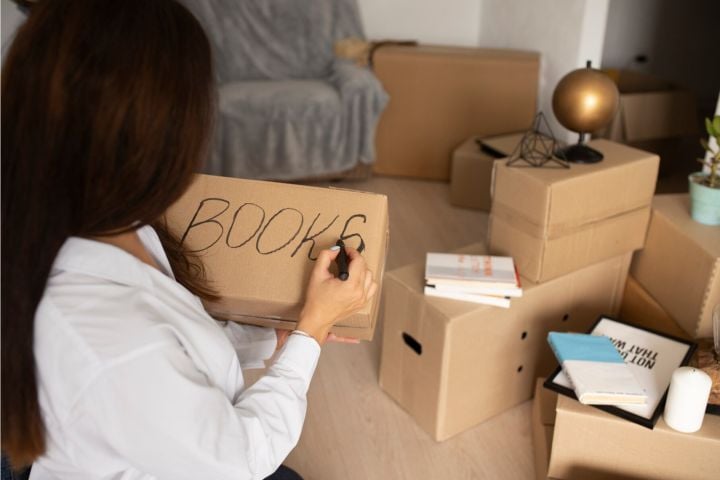
Not Labelling Boxes by Room
An unlabelled box has to be opened, inspected, and then carried to the right room. Multiply that by 40 or 50 boxes, and you have added hours to your unpacking time. The removalist crew also has no idea where to put anything, so every box ends up in a pile in the living room.
Label every box on at least two sides with the destination room and a brief description of contents. Use a thick marker that is readable from a distance. Some people color-code by room with tape, which works well for large homes.
Packing the Kitchen Last
The kitchen takes the longest to pack because it contains the most fragile, awkward, and varied items. Glasses, plates, small appliances, sharp knives, spice jars, and oddly shaped pots all need different packing approaches. People leave it until moving morning and then rush through it.
According to the Australian Competition and Consumer Commission, understanding what your removalist service includes before the day helps avoid last-minute surprises. Start packing the kitchen at least two to three days before the move. Pack items you rarely use first, keeping just the essentials out until the final morning.
Not Disconnecting Appliances Early Enough
Fridges need 24 hours to defrost before transport. Washing machines need hoses disconnected and drums secured. Gas dryers and ovens may need a licensed technician to disconnect them. None of this can happen in the 20 minutes before the truck arrives.
Make a list of every appliance that needs to be disconnected and work backwards from your moving date. A professional removalist team like R2G Transport will advise you during the quoting process on which appliances need preparation and how far in advance to start.
The Bottom Line
Every one of these mistakes adds time to your move, increases the risk of damage, and costs money. The good news is they are all preventable with one evening of preparation. Pack properly, label everything, and give yourself enough lead time on the kitchen and appliances. Your moving day will go faster, your belongings will arrive intact, and you will actually enjoy your first night in your new home.
We hope you found this blog post, Common Packing Mistakes on Moving Day, useful. Be sure to check out our post, The Moving Checklist For Organizing The Entire Move, for more great tips!

Have Experience in the Moving Industry? Want an Additional Income Stream? Work With All Around Moving!
All Around Moving’s Work With Us program can help you, a moving relocation consultant, receive more income. Click here to learn more about it.