
Most of us don’t have a Pinterest-worthy extra room just waiting to become the perfect home office. More likely, your “office” is tucked into the corner of your living room, squeezed into a guest room, or carved out of whatever nook you could claim. And when space is tight, it’s easy for your setup to feel cluttered and cramped instead of calm and productive.
The good news? You don’t need a big space to create a workspace you actually enjoy being in. With a few smart design tricks, you can make even the smallest home office feel open, organized, and inspiring. Let’s dive into how to turn that little corner of yours into a space that feels a whole lot bigger.
Start with the right location
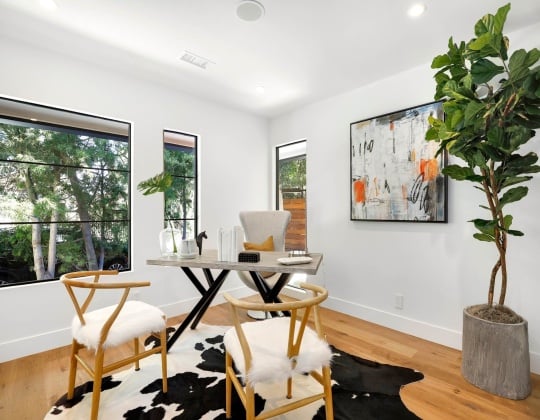
When you’re short on space, where you put your home office matters just as much as how you style it. Look for a spot with plenty of natural light if you can; near a window is ideal for keeping your energy up and helping the space feel bigger than it is. If that’s not an option, don’t worry. A quiet corner of your bedroom, a hallway nook, or even a converted closet can work wonders with the right setup.
Consider what kind of space you need
Think about how you’ll actually use the space, too. If you’re mostly on calls, you’ll want somewhere that gives you a bit of privacy. If you’re working with a lot of papers or a second monitor, you’ll need a wall or surface that can handle a larger desk.
If you’re still figuring out the best spot in your home, browsing listings on Redfin can be a great way to get inspiration from how other homeowners are turning small spaces into functional offices.
Choose furniture that saves space
In a small home office, bulky furniture will overwhelm the room quickly. Instead, opt for pieces that do double duty or tuck neatly away when you’re not working. A wall-mounted desk, ladder-style desk, or even a fold-out option can free up precious floor space.
Multi-purpose furniture is your best friend here; think ottomans with hidden storage, a filing cabinet that doubles as a side table, or floating shelves instead of a bulky bookcase. The goal is to keep surfaces clear and the room feeling light, even if your office footprint is tiny.
Use light and color to create openness
The colors and lighting you choose can completely change how big (or small) your office feels. Light tones like soft whites, grays, or beiges make walls recede and instantly brighten the space. If you love color, use it in small doses, such as an accent wall, desk accessories, or artwork, to add personality without overwhelming the room.
Lighting is just as important. Natural light is ideal, but if your office doesn’t have a window, layer different light sources to mimic it. A mix of a desk lamp, floor lamp, and soft overhead lighting will keep the space from feeling dark or closed in, even after the sun goes down.
Keep it organized and clutter-free
Nothing shrinks a small space faster than piles of paper, tangled cords, and random office supplies scattered everywhere. The trick is to get ahead of the clutter before it takes over. Use baskets, bins, or drawer organizers to give everything a home, and don’t underestimate the magic of a good cable organizer.
Try to keep only the essentials within reach and stash the rest. A “one in, one out” rule works wonders: if you bring something new into your office, something else has to go. That way, your space stays tidy, and you actually enjoy sitting down to work each day.
Add personal touches without overcrowding
A small office doesn’t have to feel sterile. Adding a few personal details can make the space inspiring without cramping it. A plant on your desk, a framed photo, or a simple gallery wall can bring in personality and warmth.
The key is scale: one or two larger decor pieces usually look better than a dozen tiny knick-knacks. Think of it like curating your space instead of filling it. A splash of greenery, a piece of art you love, or even a cozy throw over your chair can make your home office feel like it’s truly yours.
Incorporate tech thoughtfully
Tech is essential in a home office, but it can also add visual clutter if you’re not careful. Opt for wireless accessories to keep cords to a minimum. Consider compact devices like a small printer or a multi-use monitor to save space without sacrificing functionality.
Hidden charging stations, cable organizers, and smart placement of gadgets can make a big difference. When your tech is organized and intentional, your small home office design feels cleaner, more open, and way more enjoyable to work in.
Final thoughts: make the most of your small home office
At the end of the day, designing a small home office isn’t about how much square footage you have; it’s about how you use it. With the right mix of smart storage, space-saving furniture, and a few design tricks, even the tiniest corner can feel like a calm, productive workspace. With a little creativity, your small home office.
We hope you found this blog post on How to Design a Small Home Office That Feels Spacious useful. Be sure to check out our post on Ideas That Can Make an Office Feel Like Home for more great tips!

Have Experience in the Moving Industry? Want an Additional Income Stream? Work With All Around Moving!
All Around Moving invites you to join the Work With Us program and work from home. We’ll help you make money arranging moving services by establishing your own moving consultant business operation. Read the simple terms here to learn more.
Real estate professionals are invited to submit blog articles to our site, especially those covering residential living in villas, apartments, or duplexes, and strategies for marketing commercial buildings.